
From Science Pulse:
n a breakthrough for Parkinson’s disease research, scientists have discovered how two proteins on brain cells, Aplp1 and Lag3, team up to help harmful clumps of alpha-synuclein spread from neuron to neuron. This process drives the progression of Parkinson’s by killing dopamine-producing neurons responsible for movement and coordination.
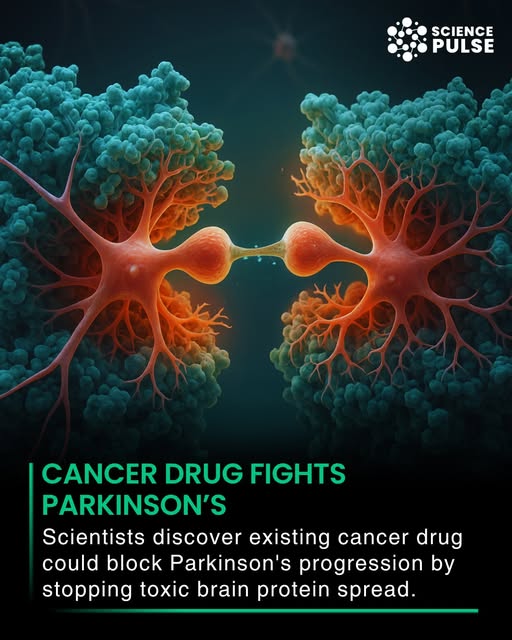
Excitingly, an FDA-approved cancer drug that targets Lag3 was found to disrupt this protein partnership in mice, blocking the toxic alpha-synuclein buildup. When both Aplp1 and Lag3 were removed from mice, harmful protein uptake dropped by 90%, far more than targeting just one protein. The melanoma drug nivolumab/relatlimab, which includes an antibody against Lag3, successfully interrupted the Lag3-Aplp1 interaction and stopped the spread of these damaging proteins.
This discovery offers hope that a treatment for Parkinson’s might already be available by repurposing existing cancer medications. Parkinson’s affects over 8.5 million people worldwide, causing symptoms like tremors, stiffness, and difficulty walking. Stopping alpha-synuclein from spreading could slow or halt disease progression.
Next steps include testing this approach in Parkinson’s and Alzheimer’s mouse models to confirm its effectiveness. This finding could fast-track new therapies for neurodegenerative diseases and improve millions of lives.




 THE RICHARD OF OZ
Leave a comment